
From Rage to Resilience: Emotional Regulation After Betrayal
Guest post by Matt Wenger, MA, LPC, CCPS, CSAT, Executive Director of Begin Again Institute, a treatment center that offers 14-day trauma-focused Intensives for men seeking recovery from porn and sex addiction.
If you’ve experienced betrayal, infidelity, hidden addiction, or chronic deception, you may recognize some of these thoughts:
“I can’t stop being angry, and I don’t know if that’s normal.”
“I feel like I’m going crazy. One minute I’m furious, and the next I’m completely numb.”
“I’ve been told I need to calm down, but something about that feels deeply wrong.”
“I feel like I have become someone else.”
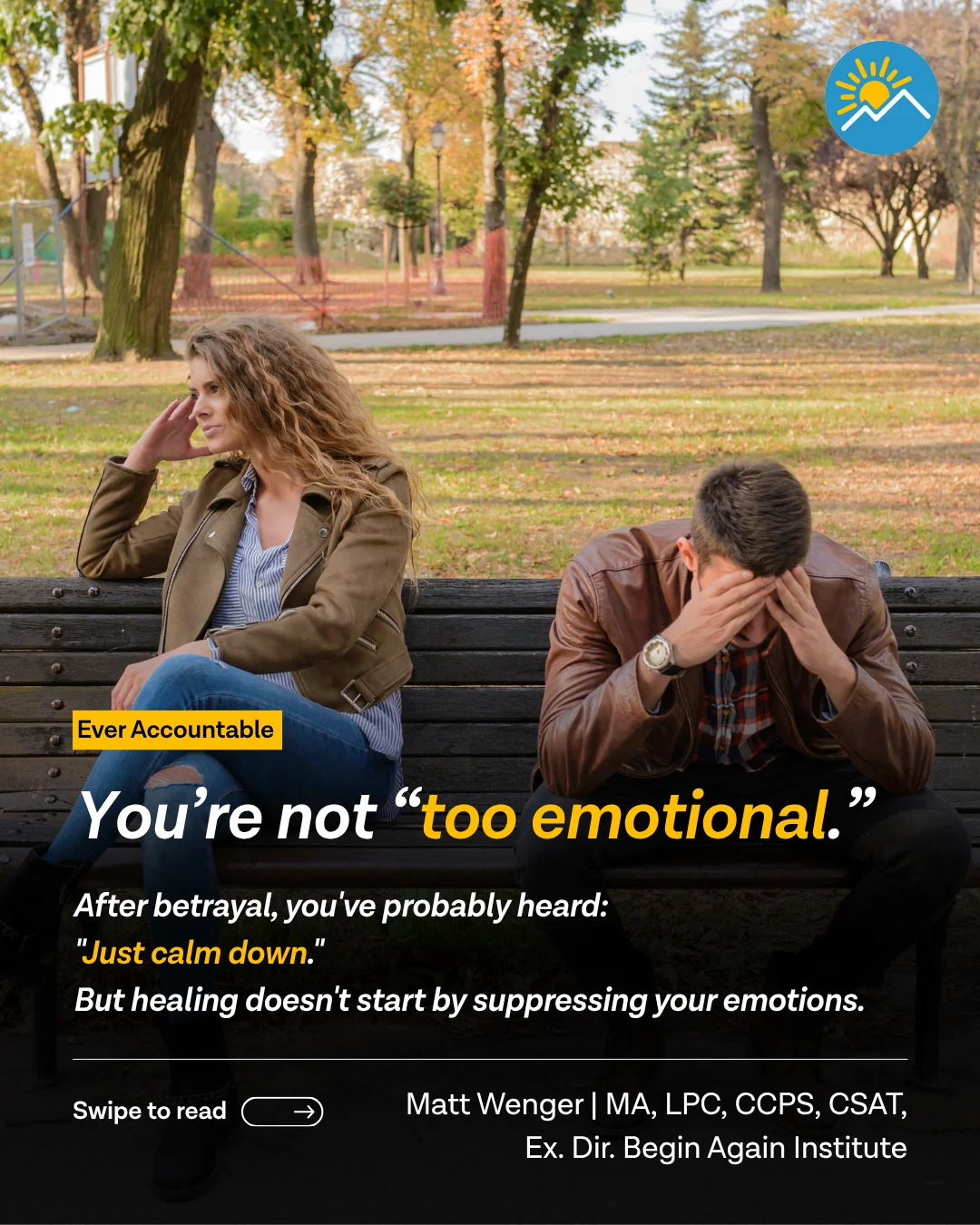
You’re not going crazy. And you don’t need to “calm down,” at least not in the way people mean when they say it. What you need is for your anger to be understood and to understand your own anger. Because healing after betrayal isn’t about managing your emotions into submission. Emotional regulation after betrayal is about learning what your emotions are telling you, and letting that information guide you toward recovery.
Table of Contents
- Why Betrayal Disrupts Emotional Regulation
- The Emotional Cycles That Keep You Stuck
- How Betrayal Trauma Therapy Can Help
- What Emotional Healing Can Look Like
- Meet Matt Wenger
Why Betrayal Disrupts Emotional Regulation
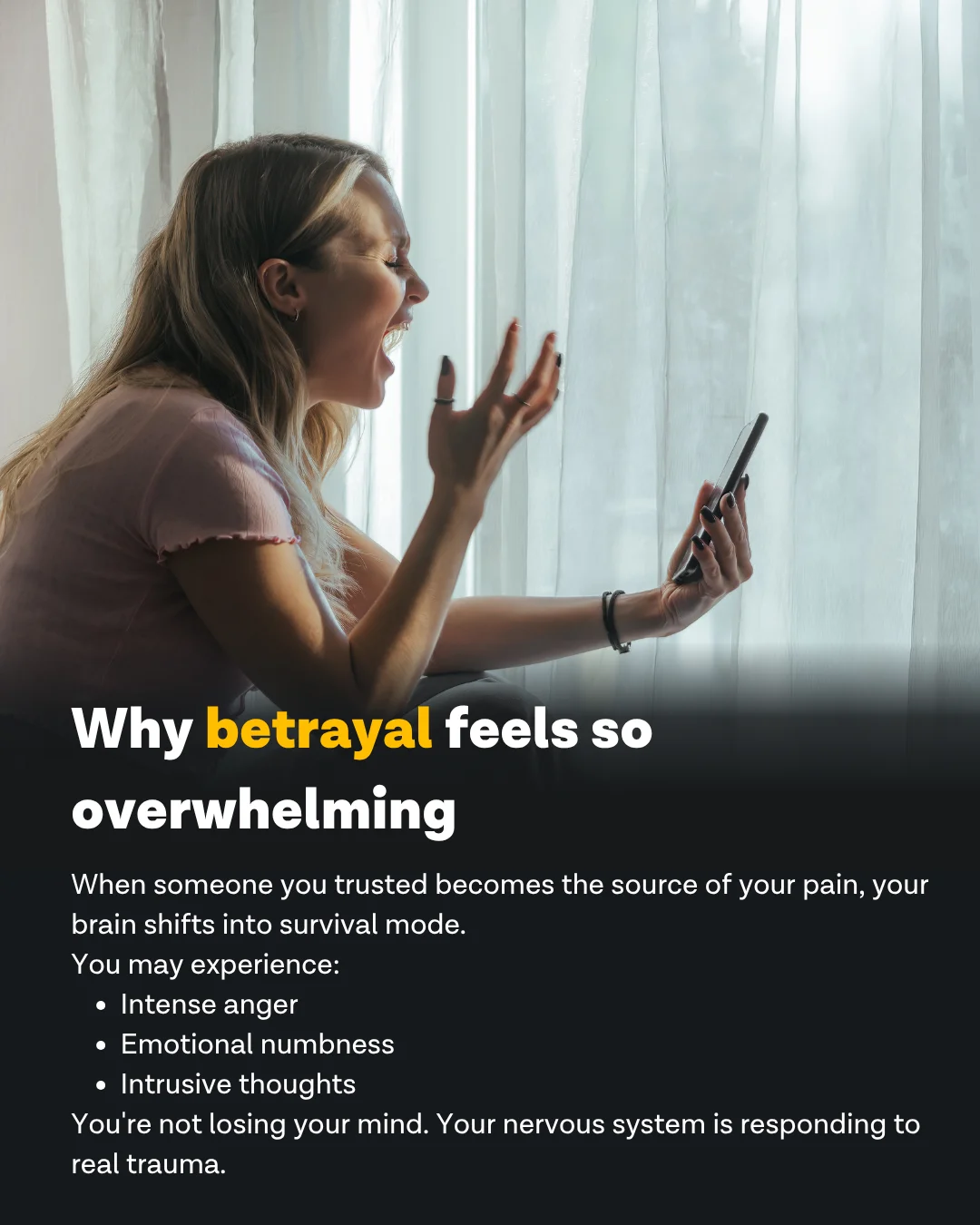
Betrayal trauma is a relational, emotional, and physiological wound. When the person who was supposed to be your safest relationship becomes the source of your deepest harm, the nervous system responds the way it responds to any serious threat. It goes into survival mode.
How the brain responds to betrayal trauma
This is what clinicians call emotional dysregulation, and it’s one of the most disorienting features of healing after betrayal trauma. The brain’s threat-detection center, the amygdala, effectively hijacks the body. Stress hormones like adrenaline and cortisol surge. The prefrontal cortex, responsible for reasoning and perspective goes temporarily offline. The result is fight, flight, freeze, or fawn.
Why you are normal if you’re experiencing emotional dysregulation
You may find yourself flooded with intrusive thoughts, unable to sleep, cycling between rage and emotional shutdown, or hypervigilant to your partner’s every word and mood.
You haven’t lost your mind. It’s your nervous system doing exactly what it was built to do after a serious attachment injury, the kind of rupture in relational safety that redefines how secure your most important bond feels.
In my practice, I find that simply naming this, explaining that the brain and body are responding to real harm, offers enormous relief to betrayed partners who have been told, implicitly or explicitly, that their reactions are the problem.
The Emotional Cycles That Keep You Stuck
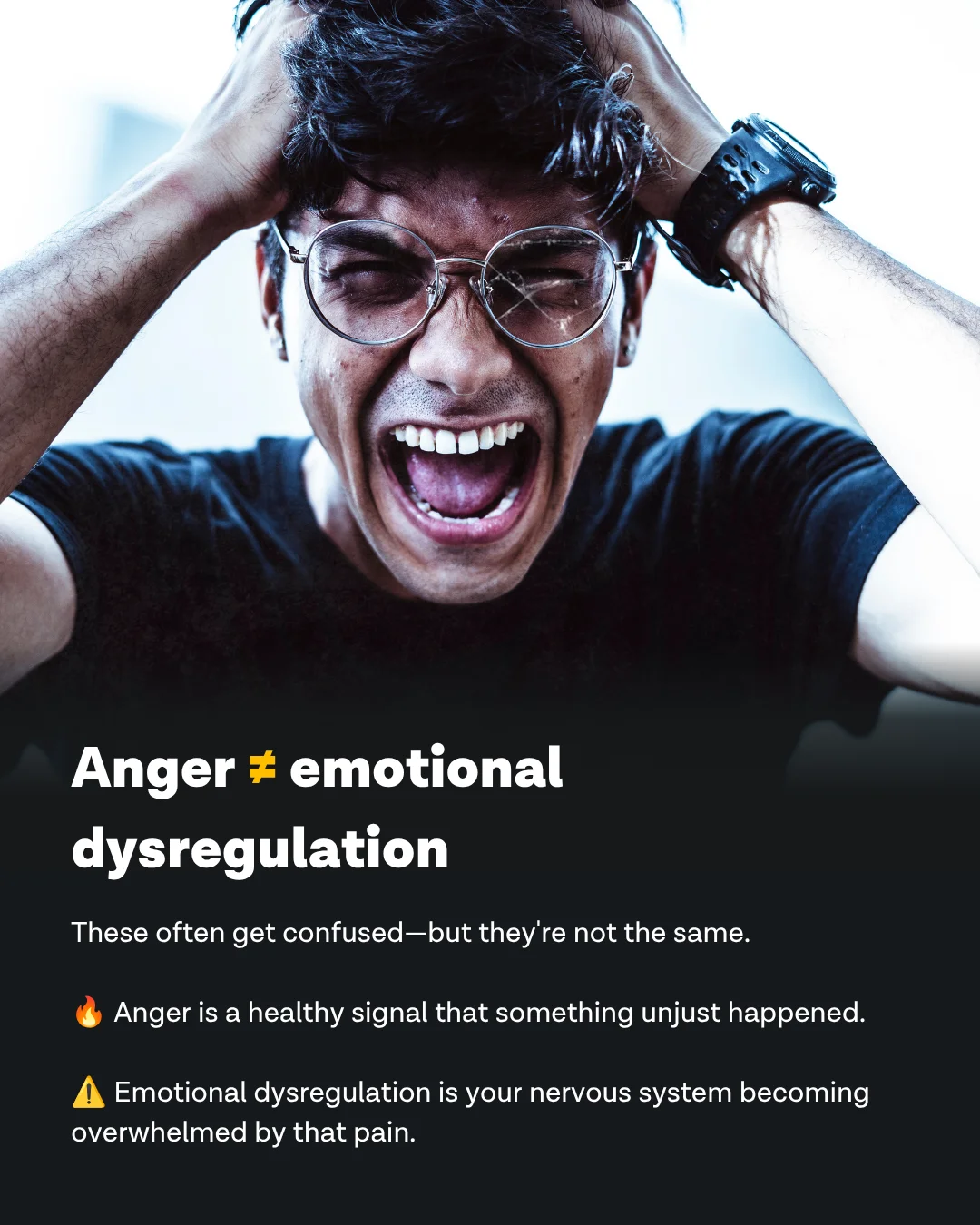
Here’s what makes betrayal trauma so particularly difficult: emotional dysregulation and anger aren’t the same thing, but they get treated as if they are.
Dysregulation is when the nervous system is overwhelmed. Anger is something different. Anger is an emotion. Anger is a signal. It is an appropriate, intelligent response to injustice, and in the context of betrayal, it makes a lot of sense.
Betrayed partners often carry messages from culture, religion, family, or even previous therapy that distort their relationship with their own anger.
- “Anger is a sin.” In other words, good people forgive quickly and move on. But there is nothing righteous about premature forgiveness. Premature forgiveness leads to resentment, unprocessed pain, long term inner confusion, and self doubt. Anger in the face of real harm is not a moral failing. It’s a signal that something wrong needs to be made right.
- “Angry women are hysterical.” The idea that female anger is symptomatic of pathology reflects cultural bias, not clinical reality.
- “Women should be nice, sweet and quiet.” Or, “You should smile more.” This is simply more bias that punishes women when they have big feelings.
- “Men’s anger is dangerous.” Betrayed men face an equally restrictive message that their anger must be tightly controlled. This leaves almost no room for the legitimate grief and outrage that betrayal produces.
Myths like these don’t protect anyone. They silence the people who’ve been harmed. And when betrayed partners believe them, they get stuck not because their anger is wrong, but because they’ve been taught they can’t trust it.
How Betrayal Trauma Therapy Can Help
In my work with betrayed partners, I draw on attachment theory and trauma-informed approaches to help clients understand the difference between anger and dysregulation, and to work with both.
The body is a primary site of betrayal injury. According to the Mayo Clinic, long-term activation of the stress response system, and the stress hormone cortisol can disrupt nearly every system in the body. This contributes to anxiety, depression, high blood pressure, sleep problems, and autoimmune issues.
Regulated anger – anger that is felt, named, and expressed without explosive discharge – is not just psychologically important. It is a kindness to the body.
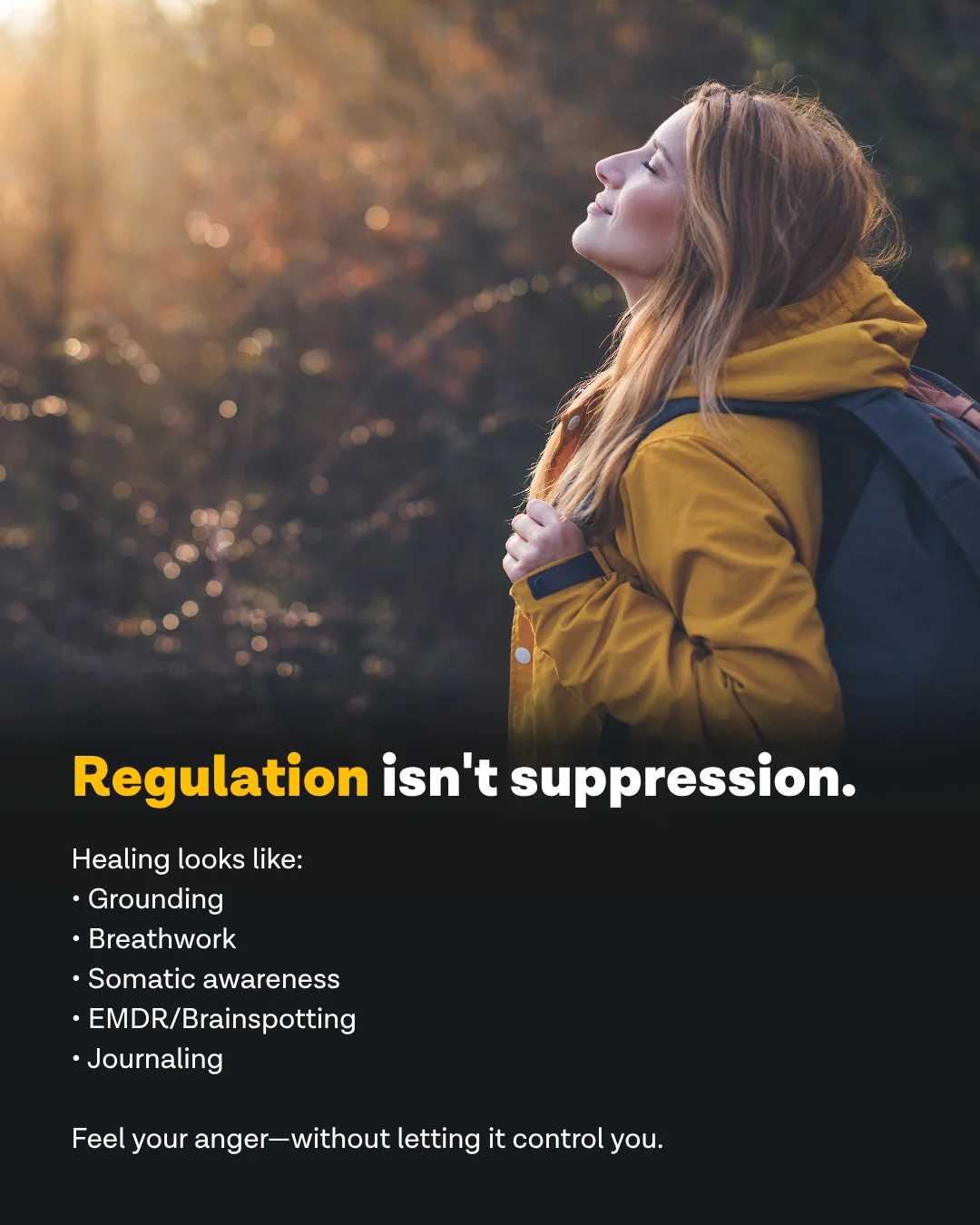
The goal of emotional regulation work in betrayal trauma therapy is not to suppress anger. Instead, the goal is to help clients express it in ways that are embodied, grounded, and identity-based, rather than explosive or collapsed. Here are some vital emotional regulation skills involved:
- Somatic awareness
- Paced breathing
- Grounding exercises
- EMDR
- Brain-spotting
- Anger journaling
These skills aren’t about muzzling anything. They preserve the self and the body from the compounding harm that unchecked emotional dysregulation causes.
This distinction also matters for safety. Partners in betrayal situations sometimes find that their dysregulated anger gets turned against them, used as evidence that they are the problem. Expressing anger from a regulated, grounded place is a form of self-protection.
I say to my clients, “What you are feeling is right and makes sense. And we can feel all our emotions in a grounded/regulated way.”
“Anger is good, as it tells us where the hurt happened.”
What Emotional Healing Can Look Like
Rather than something to eliminate, anger is a resource that evolves across the healing journey.
Early on, it provides the energy to establish safety, to hold firm on boundaries, and resist pressure to minimize what happened. As healing deepens, anger helps partners identify grief, reclaim identity, and locate the places where old wounds were reopened. In later stages, it transforms into something that looks more like empowerment: the capacity to make clear-eyed decisions about your worth, your relationship, and your future.
Emotional regulation and healing is the shift from desperate self-protection to confident, grounded self-advocacy. It doesn’t happen all at once, and it isn’t linear. But it is possible.
Betrayal buries something essential: your sense of agency, worth, and ultimately, your identity. Anger, regulated and honored rather than managed away, is how you dig yourself back out.
When anger is met with curiosity, when it’s held as meaningful rather than pathologized, partners begin to rebuild not just safety but self.
Then you can celebrate the healing journey from rage to resilience.
Meet Matt Wenger
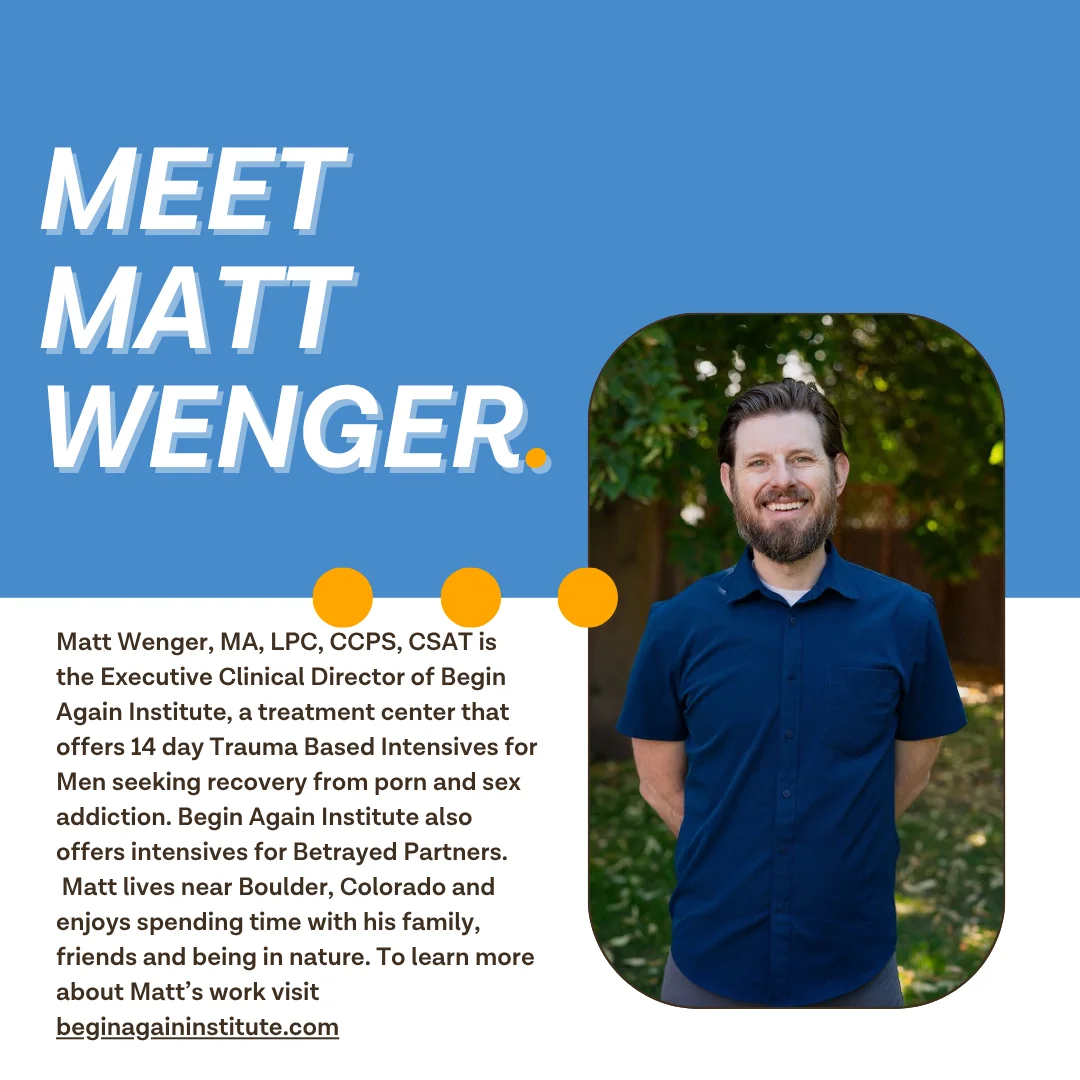
Matt Wenger is the Executive Clinical Director of Begin Again Institute, a treatment center that offers 14-day trauma-focused Intensives for men seeking recovery from porn and sex addiction.
Begin Again Institute also offers intensives for Betrayed Partners.
He has served more than 1,500 families in that setting since 2019.
Matt’s expertise is in men’s addiction, betrayal trauma, childhood trauma, couple’s recovery and the spiritual aspects of recovery. Matt holds a Master’s degree in Couples and Family Counseling and is credentialed as Licensed Professional Counselor (LPC), Certified Sex Addiction Therapist (CSAT), and Certified Clinical Partner Specialist (CCPS). Matt lives near Boulder, Colorado and enjoys spending time with his family, friends and being in nature. To learn more about Matt’s work visit beginagaininstitute.com.